Help people choose and find you.
Lead with the food. Give the menu room for names, useful descriptions and current prices. Put the address, opening hours and directions where a phone visitor can act on them.
Main action See the menu or plan a visit
Website design for bakeries
UpOnUp handles the original design, copywriting and build, shaped around your bakery and the way customers buy.
A good pastry photograph earns attention. The rest of the website has to answer the practical questions: what is on the counter, when are you open, where are you, and can I order ahead?

Buttr & Ember / Bakery website example
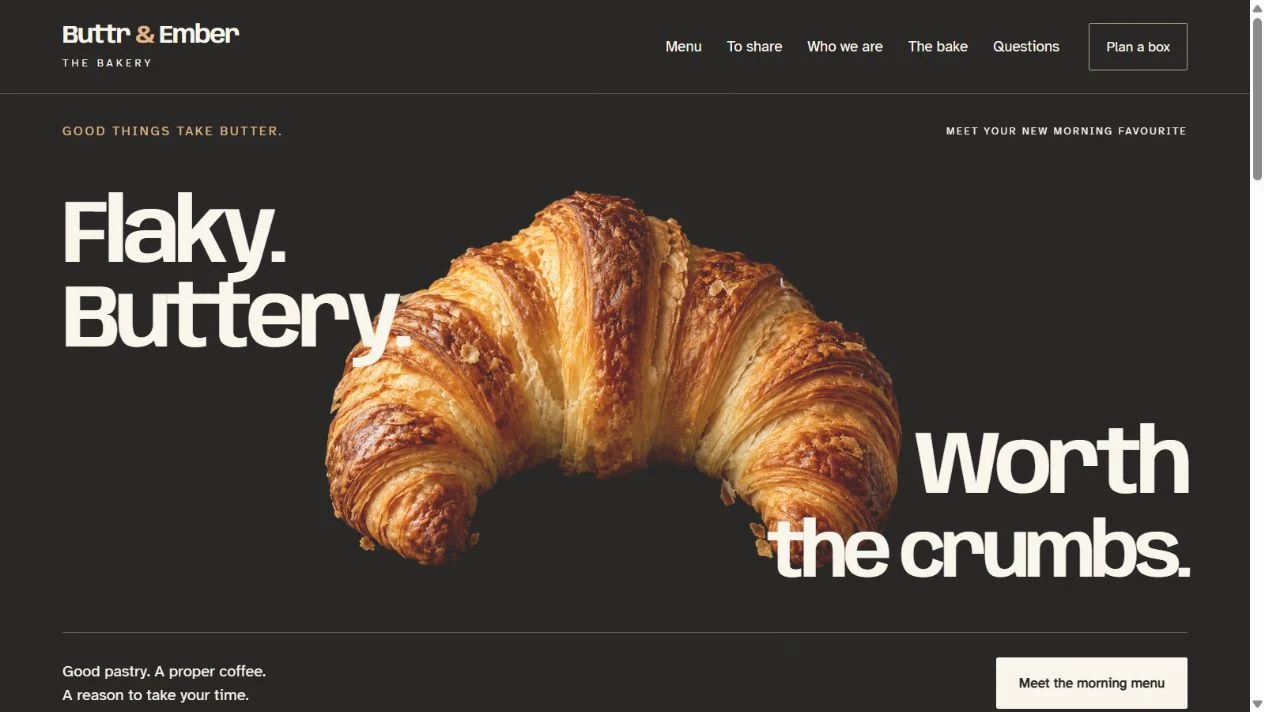
The pastry gets your attention first. Then the menu helps you choose, and the visit details show you how to get there. Try the pastry-box planner to see how a visitor can put their choices together.
Why these sections exist
The first image shows what someone came for. The headline is short enough to let the pastry carry the mood.
A menu needs enough detail to help someone choose. A beautiful photograph does not answer what is available or how much it costs.
Once someone has chosen what they fancy, finding the bakery should be simple. A clear address and current opening hours help them plan the visit; your team confirms those details and keeps them up to date.
Start with the customer's next move
Someone planning a coffee stop needs different information from someone ordering a birthday cake. Start with how you serve customers, then choose the pages and ordering arrangements that make sense for your bakery.
Lead with the food. Give the menu room for names, useful descriptions and current prices. Put the address, opening hours and directions where a phone visitor can act on them.
Show the kinds of orders you take, lead times, collection area and a few real examples. Ask for the event date, size and any important details in the enquiry, without promising availability before you check.
Products, availability, collection slots, payment, confirmation and food information have to work together. If the site must take and manage orders, it needs an agreed commerce scope rather than a standard enquiry build.
UpOnUp's standard website build suits a bakery that needs clear pages and an enquiry route. Taking payment for bakery orders, stock control and collection-slot systems need a separate written scope. Map the functions you need
When comparing bakery website examples, try something a customer would want to do. In Buttr & Ember, start with a box for a group. The useful detail is how the pages carry that choice forward.
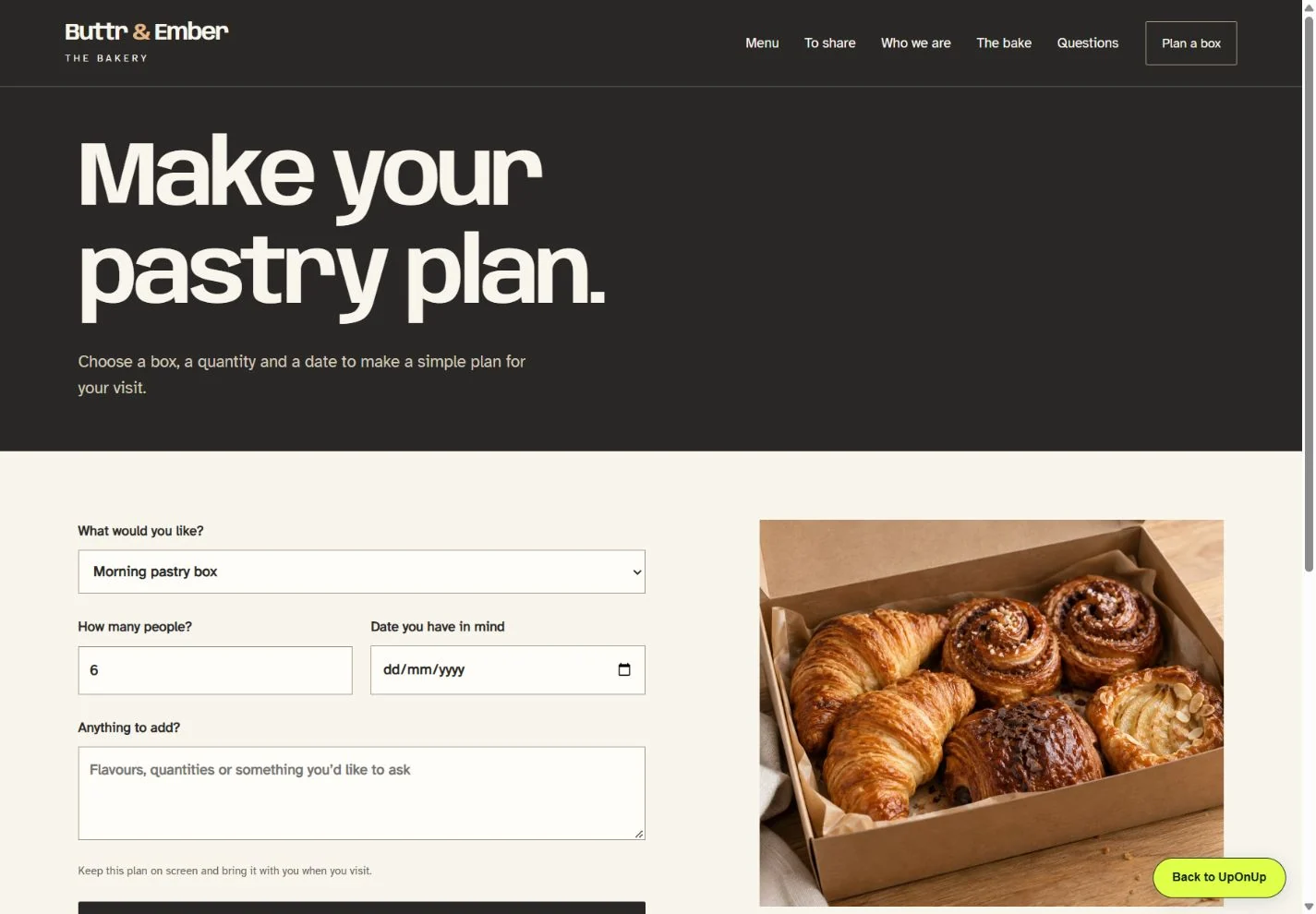
The sharing-box page separates morning, savoury and sweet selections, with descriptions that help someone picture a breakfast or gathering. This is a pastry-box example; a bakery selling bespoke celebration cakes would need its own content about designs, sizes and the enquiry process.
Choose “Plan a savoury box” and the planner opens with that box selected. The visitor can still change it. Carrying the selection through gives the next page context instead of asking them to start again.
The planner asks how many people the box is for and a date the visitor has in mind. Headcount is useful planning information; it is not a confirmed number of pastries. Pressing “Review your plan” shows the box, group size and date together, with a prompt to discuss availability, ingredients and price at the counter.
A real enquiry route would also need a way to reply, a known recipient and an agreed process for confirming the request. If the website accepts orders, it must deal with the actual products, prices, availability, payment and collection arrangements. We agree those requirements before treating them as part of the build.
Bring the decisions you already make behind the counter: whether boxes have a fixed size, how much notice you need, which requests need a conversation and who confirms them. Those facts decide whether the website should show information, collect an enquiry or connect to an ordering service. They are more useful than choosing a form because another bakery has one.
Our bakery website examples guide compares visits, advance enquiries and ordering routes, with an editable brief for your bakery. For a bakery café, the restaurant content guide helps organise menus, visit details and changing information. For a new enquiry route, use the quote-request form guide to decide which questions belong in the first message.
Before we design
The best material is already around you: the bread coming out, the counter filling up, the front door people are looking for. We’ll organise the pages and write the copy, with your team checking the menu, hours and food information.
See the image planning guideSignature products, the front door, the counter and people making the food, with permission to publish them.
Current menu and prices, address, hours, collection rules, enquiry lead times and any seasonal changes.
Owner-approved allergen information and a clear way for customers to ask questions. If you sell food online, check the applicable requirements before the order journey is built.
We turn your confirmed menu, products, photographs and business details into a website shaped around the way people buy from you.
Your team checks food information, availability and business facts. Together, we agree where enquiries arrive and what customers should expect next.
Ordering, payments, stock and collection-slot systems need a separate scope. Optional hosting and ongoing content changes are agreed separately.
Your bakery, your next step
Bring your current site, your menu or just the idea. Tell us whether you want people to visit, ask about a cake or place an order online, and we’ll explain what each needs before agreeing the work in writing.
Already have a website? We can email you a free homepage design to look through, with no obligation to buy. The full website and any ordering system are scoped separately.
Get a free homepage design