All business types

Website design for mortgage brokers.

Someone looking for mortgage advice may be buying for the first time, coming to the end of a deal or wondering how their income will be assessed. We design and write your website to help them find the relevant service, meet the advisers and understand how to get in touch, with the disclosures and wording your firm approves. We agree the markets you serve and who signs off the content before starting.

Explore Revenant London.

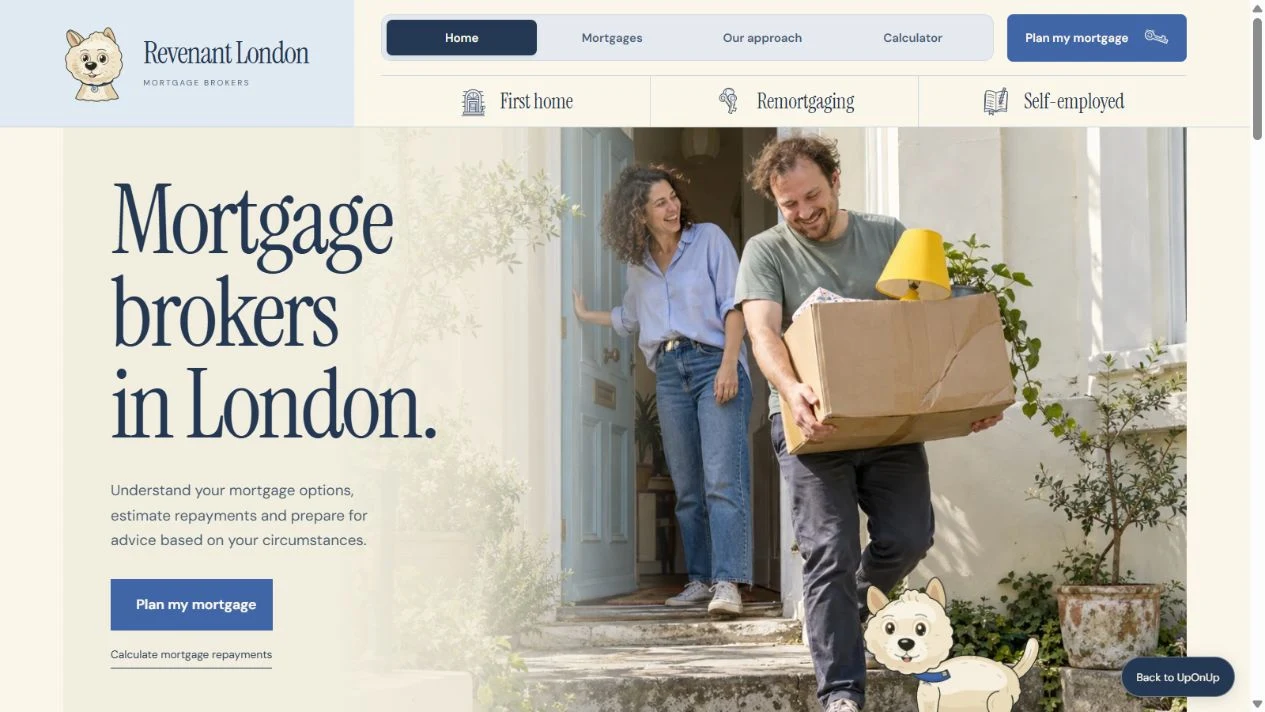
Revenant London helps someone make sense of their starting point, explore the practical questions and prepare for a conversation with an adviser. The preview tools provide estimates and preparation notes; they do not give mortgage advice or submit an application.

Revenant LondonScroll to exploreOpen full website in a new tab
Skip website preview

Explore the Revenant London website.

How we built Revenant London

From the type of mortgage to the first conversation.

The first-home, remortgage and self-employed pages speak to different starting points. You can then explore how the planning room brings estimates and preparation together. Any tools for your own site would be scoped and reviewed with your firm.

Discuss your brokerage's website

Two starting points.
Two useful routes.

Look through these pages as someone considering advice. The design gives each situation its own explanation, then offers a way to prepare questions.

Buying a first home

“Where do I start?”

  1. Find the relevant explanation.

    The first-home page brings budgeting, buying costs and the stages of the purchase together. Someone can begin with the whole task, before choosing a tool.

  2. Read the questions in context.

    Short answers sit alongside the page’s main explanation. The calculator is a separate choice, with its own estimate limits.

  3. Prepare for a conversation.

    The checklist link carries the first-home choice into the planner, so the visitor can continue from the situation they have just been reading about.

Applying with self-employed income

“Will they understand how I work?”

  1. Recognise a familiar situation.

    The self-employed page separates sole traders, company directors and contractors or mixed income. That gives the visitor a more relevant place to read than a general mortgage introduction.

  2. Make the detail easier to approach.

    Document prompts and questions sit on the same page. The wording leaves room for individual circumstances instead of presenting a guaranteed answer.

  3. Keep the next step manageable.

    The preparation route starts with self-employed selected. A visitor can choose their timing and save a checklist without sending financial records.

The example planner lets a visitor download preparation notes to their device. It does not contact a broker, assess eligibility or make an application. A tool or connection for your own website needs an agreed scope and your firm’s review.

Plan a service page around a real customer question

What your clients are checking

Show who gives the advice and how to contact them.

Choosing an adviser is a personal decision. People want to know who they’ll speak to and how the conversation will work before discussing their income, debts and plans. Your website can give them that introduction.

Show the people, not the stock photo.

A photograph and a clear introduction help someone put a person to the advice. Show your advisers, the work they handle and how clients can expect to deal with them.

Help people recognise their own situation.

A first-time buyer needs a different explanation from someone remortgaging or applying with self-employed income. We make those starting points clear, so people can find the questions that matter to them.

Make getting in touch feel easy.

Explain what to have ready and how your fees work in wording your firm approves. Keep the first enquiry short, so someone can ask about their situation before getting into the detailed paperwork.

Built for sign-off

Agree regulated wording before publication.

Tell us which markets your firm serves and who reviews regulated content. We plan the page structure around the disclosures, warnings and approval steps your firm supplies. Your responsible reviewer checks the wording before launch; the requirements and any changes are agreed for your project.

  • Status and firm detailsSpace for the business identity and regulatory details your market requires. For a UK appointed representative, your reviewer can provide the relevant principal and firm-reference wording.
  • Risk warnings where they belongPlaced where your compliance team requires them, including the repossession warning where it applies.
  • No invented numbersWe don't make up rates, savings, reviews or case results. Figures appear only when you supply approved wording.
  • A review before anything goes liveYou approve every page, and your network or compliance adviser can review the site before launch.

We design and write the website. Regulatory approval stays with your firm or network, and we don't give compliance advice.

Illustrative UK page layout. Your firm’s approved wording will differ.

Keep the page and its approval together.

A comment saying “approved” is much more useful when everyone knows which version it refers to. Keep the page address or preview reference beside the wording supplied by your firm, the reviewer’s response and any changes still to make.

Our short record gives your team somewhere to collect those decisions. It is a project aid, not a compliance assessment or regulatory approval. Use your firm or network’s required process wherever one applies.

Download the page approval record (.txt)

For each page, keep track of:

The version
Page or preview reference, date and what has changed.
The source
Firm-supplied wording and the person responsible for the business facts.
The decision
Named reviewer, response, conditions and changes still open.
The final check
Confirmation of the revised version before your publication approval.

Include relevant forms, tool wording and linked journeys in the review. Keep private client information and account access out of the record.

How it works

Review the pages before they go live.

We bring the writing, design and build together around your firm. You can review the actual pages and arrange any network sign-off before publication. See the agreed scope and service terms.

  1. 1
    Order and send the basics.

    Tell us about your firm, your advisers, the cases you want more of and any wording your network requires. We confirm the details needed for the build alongside your deposit.

  2. 2
    See your first version.

    Within 48 hours after payment and confirmed details, you get a first reviewable website, designed and written for you.

  3. 3
    Refine and get sign-off.

    Two rounds of refinements. This is the moment for your compliance review, so any changes it asks for are made before launch.

  4. 4
    Launch when you approve.

    We publish once you and, where needed, your network have approved the site, the balance is paid and the required domain steps are ready. We agree any optional hosting separately.

Questions brokers ask

The practical details, up front.

If your question isn't here, ask us.

I'm an appointed representative. Can my network review the site?

Yes, and we'd encourage it. Build their review into the refinement rounds, and we will make the changes they need before the site goes live.

Will you write about rates or products?

We avoid rate-led copy, which dates quickly and needs careful approval. If you want figures or product details on the site, we use the wording you or your network supply.

Can you add a mortgage calculator or a CRM form?

A simple enquiry form is included. Calculators, sourcing tools and CRM integrations depend on your systems and your compliance view, so we scope them separately before any work starts.

Do I own the website?

Yes. The finished website and project files are yours once the build is paid, and you can host them wherever you like.

Plan the content before the design.

Use our website brief builder to record your audience, services and approved claims. If you already have a site, the redesign checklist helps you account for existing pages and enquiry routes.

See how writing and design work together, or ask about your brokerage.

Start your website.

How the build works

October offer

£799total

Design, writing & build.
Up to 25 agreed pages.

50% deposit.
50% when you’re happy.

Rounded to £399 now + £400 on approval, before launch.

9 of 20 places remaining at this price. Ends 31 October, or sooner once they’re gone.

Start your website

November onwards:
£3,000+ depending on scope.

Full scope & offer terms

See a new direction first.

We’ll design your new homepage. For free.

A homepage design for your business. Send us your current website. We’ll email you a new design to look at, with no obligation to order a website. See how it works.

Rather talk? Message us or email [email protected]. We only use your details to reply; see our privacy notice.

Message us