B2B website design
B2B website design.
Make your services
easy to understand.
You might provide a regular service, take on a defined project or advise another business. We write, design and build a website that explains what you do, who it suits and how to begin, whether your next customer is a local business owner or a team working across markets.
For independent specialists, small service firms and growing B2B businesses. We work with you remotely, wherever you’re based.
Help someone picture
working with you.
A business owner comparing regular support needs different answers from someone commissioning a one-off job. We shape the pages around what your customers need to choose, then give the work a design of its own.
An ongoing service
For example, regular workplace cleaning or ongoing business advice.
- What will happen regularly?
- Explain the work covered, the working rhythm and what the customer needs to provide. Make setup work and separately agreed additions clear.
- Will it fit this business?
- State the coverage or remote arrangements, who the service suits and any practical requirements. For work on site, access and working hours may matter.
- How does it begin?
- Explain what you need before proposing the arrangement, and whether the next step is a call, a site visit or a quote.
A defined project
For example, work at commercial premises or a consultancy project with an agreed handover.
- What job can you take on?
- Describe the work and its limits, with relevant examples you can publish. Help someone recognise whether their project belongs here.
- What needs checking first?
- Explain the details that affect scope, such as the site, access, existing systems or a fixed deadline. Tell the customer when an assessment is needed.
- What does the customer receive?
- Show the stages, responsibilities and handover. Let someone enquire without requiring a complete specification before you can speak.
Preparing the budget case for your own website? The website ROI and break-even calculator turns your costs and customer contribution into a recovery target and a business case you can discuss internally.
Let the detail do some of the explaining.
Scope and conditions deserve as much care as the headline. Highland’s pricing page keeps them beside each service. For your B2B offer, we would work out which practical questions belong beside each buying decision.
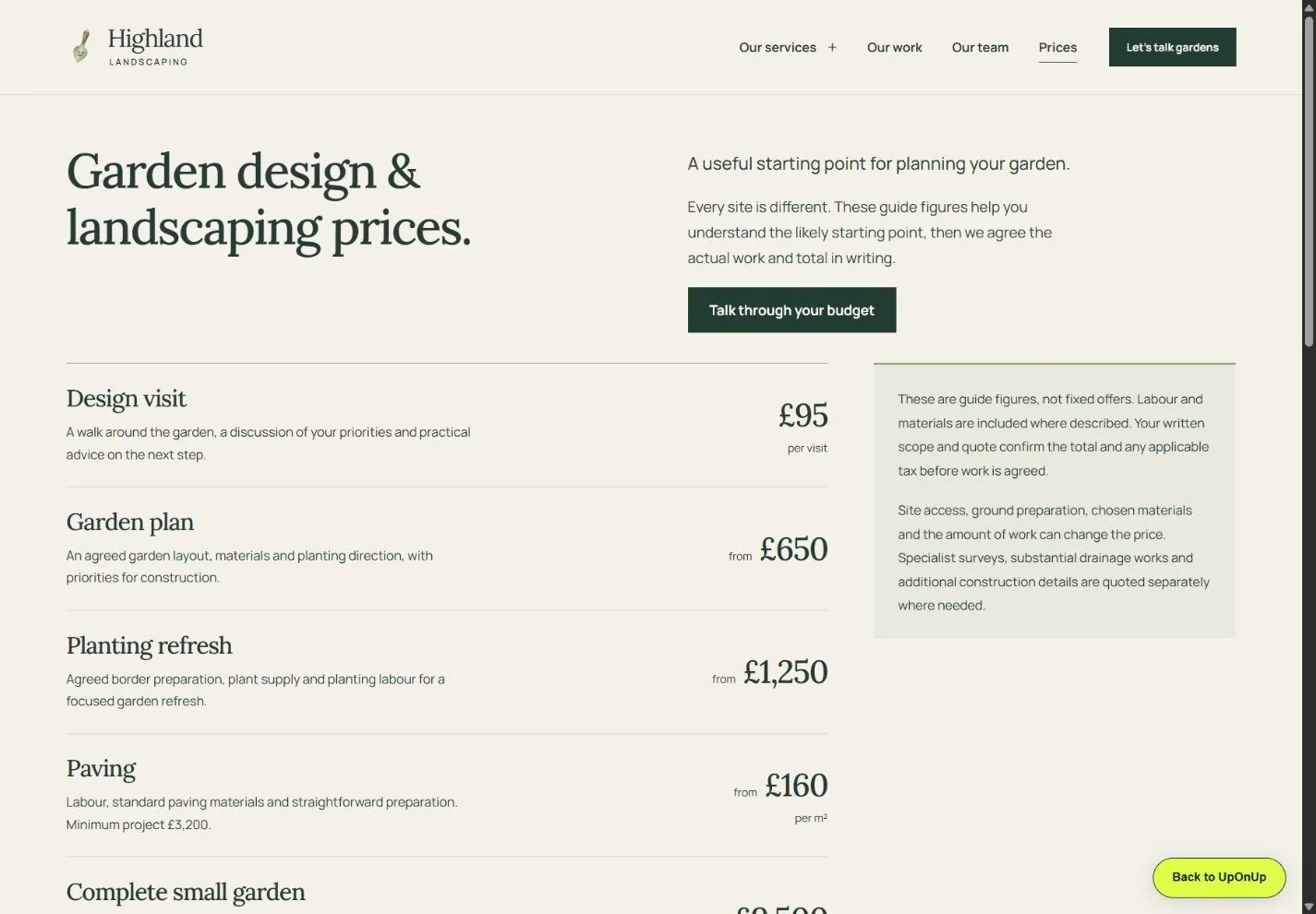
This page keeps service scope, guide prices and the conditions together. The same care matters when a business buyer has to pass your offer to a colleague.
Inspect the Highland designStructure the site around the buying questions.
Start with the services people can actually ask you for, then give the supporting detail a clear home. A specialist with one offer may need a short, focused site. Several service lines or markets need a structure that helps customers find their own starting point.
- The offer
- Name the service and the businesses it suits. An owner looking for workplace cleaning should recognise that offer before reading about your company history. Give each distinct service a clear route from the homepage.
- Services and scope
- Explain the work, what the customer supplies and how the scope is agreed. For a regular service, describe the ongoing arrangement. For a project, explain the assessment, work and handover. Separate pages help when those buying questions differ.
- Coverage and delivery
- Say where you can work and whether the service happens at the customer’s premises, at yours or remotely. Put relevant visit arrangements and restrictions beside the service. An industry page earns its place when the work or supporting evidence genuinely differs.
- People and relevant work
- Show who will do the work and the experience or approved examples that help a buyer assess fit. Use actual qualifications and permitted project material. A new business can explain its approach without inventing client results.
- The first conversation
- Ask for the service, general location or delivery arrangement, useful job details and any real deadline. Explain whether you reply with questions, arrange a call or propose a visit. Keep existing-client support and supplier requests easy to distinguish.
Your existing technical resources may be the pages buyers keep coming back to. We review those alongside the main site and agree what to keep, improve or redirect before the replacement goes live.
Ask for the details needed to reply.
Someone asking about a service may not have a complete brief yet. A few well-chosen questions can give your team enough to respond, then you can work through the detailed requirements together.
We agree a clear first step and the information needed to support it. If different teams handle new business, support and supplier requests, the routes should be obvious before anyone fills in the form.
Your website can link to an existing booking or business system. CRM connections, document handling, customer portals and other integrations need to be reviewed and scoped before they are included.
Check the route to enquiryUse the terms your buyers use.
A business buyer should understand the same core offer whether they find a service page through search, follow a referral or arrive directly from your proposal.
Use the buyer's vocabulary
A buyer might know exactly which service they need, or only the problem they’re trying to solve. We use the terms they recognise and explain the specialist detail, so both can understand where you could help.
Connect related decisions
Link service pages to the right process, application and contact route. Useful internal links help a visitor continue the investigation without starting again from the homepage.
Respect different markets
Agree the countries and audiences you genuinely serve, the language of the content and any local requirements. Separate market or language versions need an agreed purpose and scope.
A complete website.
A clear agreement.
We handle the words, design and build together, with a page plan we agree with you. Original design and copywriting, up to 25 responsive pages, an agreed enquiry route and 2 consolidated refinement rounds are included.
A first reviewable version follows within 48 hours of receiving your deposit and confirming the business details we need. You review the facts and approve the finished website before launch.
Before we start.
What kinds of B2B business is this suitable for?
The offer suits a business that needs to explain services, capabilities or a product and start an enquiry. That can include professional services, consultancies and specialist suppliers. Large product catalogues, ecommerce and software applications need separate scoping. We confirm the fit against your actual requirements before the work begins. If you are comparing trade ordering systems, the B2B ecommerce RFP checklist helps you ask suppliers the same practical questions.
Can you write about a technical or specialised service?
We can organise and write the agreed website copy from your source material, then make it understandable to the intended buyer. Your subject specialist checks technical statements, specifications and commercial claims before publication. The brief should identify anything that needs formal approval or specialist review.
Does the website include lead generation or ongoing SEO?
This is a website design, writing and build project. It includes clear page structure and an agreed enquiry route. Ongoing campaigns, content programmes and third-party marketing activity are separate work. Rankings, enquiries and sales are not guaranteed by the build.
Can different people in our company review the work?
You can involve the people needed to check the facts, brand and commercial detail. Choose one approval owner and combine their feedback for each of the two included refinement rounds. This keeps decisions clear when colleagues work in different places.